Choosing the 10 Best Effervescent Pills for Global Buyers requires more than comparing flavors, prices, or attractive packaging. Buyers must examine formulation quality, dissolution speed, ingredient transparency, manufacturing controls, and shelf stability. A tablet that fizzes quickly in a glass may still fail when exposed to humidity during shipping. Small details matter.
Pharmaceutical scientist Dr. R. C. Rowe offers a valuable reminder: “Excipients are not inert.” This principle is highly relevant to Effervescent Pills. Acids, carbonates, sweeteners, binders, flavors, and minerals can influence taste, absorption, texture, and storage performance. Reliable suppliers should provide clear specifications, batch information, testing records, and practical guidance for different markets. Packaging deserves close attention. Moisture-resistant tubes, sealed blister packs, and desiccants can protect tablets from premature reaction. Buyers should also review dosage instructions, allergen statements, and applicable quality certifications.
This guide evaluates ten leading options through a buyer-focused lens. It considers everyday hydration products, vitamin formulations, mineral supplements, and specialized wellness choices. The ranking is not absolute. Regional regulations, consumer preferences, shipping conditions, and product claims can change the result. That is worth admitting.
A strong product should dissolve evenly, taste acceptable, and remain stable until use. It should also be supported by dependable documentation. Not every popular tablet meets these standards. Some perform well in controlled warehouses but disappoint in humid climates. Others look affordable until transport losses and damaged packaging appear. Global buyers need evidence, not promises. This introduction sets the framework for comparing performance, safety, value, and supplier reliability across international purchasing decisions.
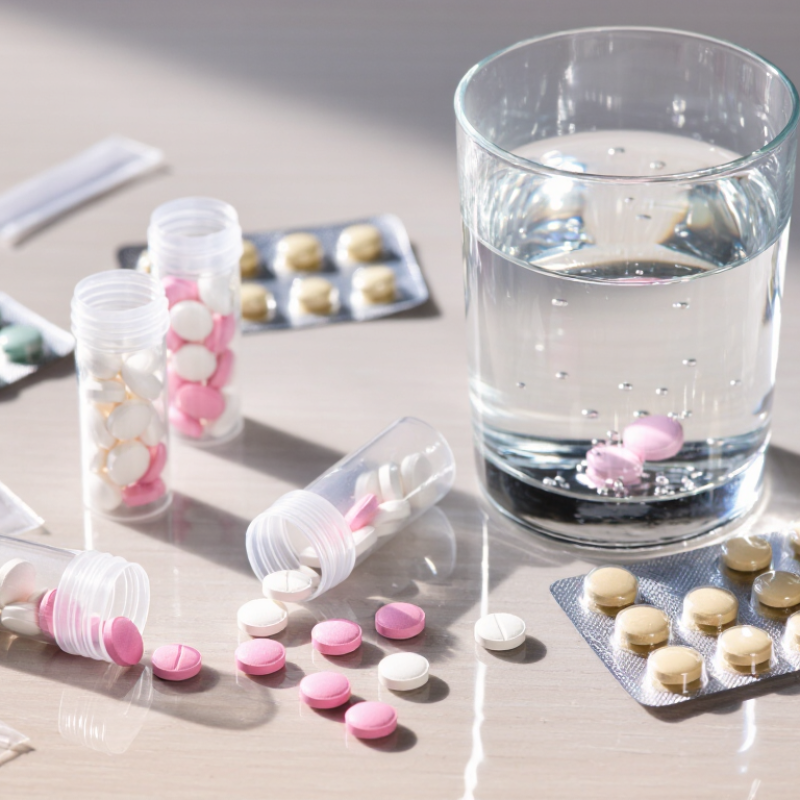
What Defines the 10 Best Effervescent Pills for Global Buyers?
The 10 best effervescent pills for global buyers are defined by trust, performance, and practical use. A clear ingredient panel should show active amounts, sweeteners, allergens, and serving guidance. Independent laboratory testing adds confidence, especially when products cross borders. However, a certificate alone is not enough. Buyers should check its date, scope, and issuing laboratory.
Performance also matters. A quality tablet should dissolve evenly in clean water, without excessive residue or a harsh chemical taste. Stable packaging helps protect it from humidity during long transport.
Individual tubes or sealed strips can be useful in tropical markets. The product should also follow the destination country’s rules for labeling, permitted ingredients, and health claims.
“Global” does not mean legally universal.
Tips: Compare the full formula, not only the headline nutrient. Check batch numbers, expiry dates, storage instructions, and customer support details.
Ask for testing documents when information seems vague. Consider serving size carefully; a low price may hide fewer usable portions. No ranking is perfect. Personal taste, dietary needs, and local regulations can change the result. Even experienced buyers should review evidence before making a large order.
How 200–1,000 mg Active Doses Shape Effervescent Pill Selection
10 Best Effervescent Pills for Global Buyers?
A 200–1,000 mg active dose changes more than the label. It affects tablet size, dissolution speed, taste, and packaging needs. A 200 mg mineral tablet may dissolve cleanly in a small glass. A 1,000 mg formula can taste sharp, feel gritty, or require more water. Moisture is another practical risk. Effervescent tablets often need high-barrier tubes or individually sealed packs. I have seen attractive formulas fail because humidity softened the tablets before shipment.
Dose selection should follow the nutrient, not marketing appeal. The NIH Office of Dietary Supplements lists 2,000 mg as the adult upper limit for daily vitamin C intake. That makes a 1,000 mg tablet substantial, especially when users consume fortified foods. Sodium also deserves attention. The World Health Organization recommends less than 2,000 mg of sodium daily for adults. Some effervescent systems use sodium-based acids or bases, so the full sodium amount should appear clearly on the label. A large active dose is not automatically better.
Tips: Compare elemental dose, not compound weight. Check dissolution data at room temperature. Ask for stability results under humid conditions. Review sodium per tablet. For global buyers, confirm local labeling rules before production. A 200 mg dose may offer better daily usability, while 1,000 mg may suit targeted, less frequent use. This trade-off needs testing, not guesswork.
Why European Pharmacopoeia Requires Disintegration Within 5 Minutes
10 Best Effervescent Pills for Global Buyers?
For global buyers, the “best” effervescent pills are not chosen by flavor alone. Quality depends on composition, packaging, testing, and consistent performance. European Pharmacopoeia requirements offer a useful benchmark. For effervescent tablets, the general standard commonly requires disintegration within five minutes, unless an individual monograph states otherwise. The test usually examines six tablets in water at controlled room temperature. Visible gas release should occur quickly, while the tablet should dissolve without a firm residue.
This limit matters in real purchasing decisions. A tablet that dissolves slowly may signal poor compression, moisture exposure, or unstable packaging. In quality-control work, small differences in humidity can change the result. It is easy to overlook this. Buyers should request batch-specific test reports, stability data, ingredient specifications, and packaging details. They should also confirm the testing method and acceptance criteria, rather than trusting a general “fast dissolving” claim.
Tips: Ask for independent or qualified laboratory results. Check whether testing follows the current European Pharmacopoeia edition. Store samples in their original tubes and inspect them after transport. A swollen seal, soft tablet, or weak fizz deserves investigation. Sensory preference still matters, but it should not replace pharmacopoeial evidence. The five-minute requirement is a strong starting point, not the whole quality assessment.
10 Best Effervescent Pills for Global Buyers? - Why European Pharmacopoeia Requires Disintegration Within 5 Minutes
Generic effervescent dosage-form benchmark for international procurement
| Rank |
Common buyer use case |
Representative active ingredient |
Typical strength per tablet* |
Recommended preparation volume |
Ph. Eur. disintegration benchmark |
Primary purchasing checkpoints |
| 1 |
Daily antioxidant supplementation |
Ascorbic acid (vitamin C) |
500–1,000 mg |
150–250 mL water |
≤ 5 minutes |
Assay, vitamin C degradation, moisture protection, flavor stability |
| 2 |
Mineral supplementation |
Calcium carbonate with vitamin D |
500 mg elemental calcium; vitamin D varies |
150–250 mL water |
≤ 5 minutes |
Elemental calcium content, sediment control, dissolution, tablet strength |
| 3 |
Electrolyte replacement |
Sodium chloride and potassium chloride |
Formula-dependent; often sodium 300–750 mg |
200–500 mL water |
≤ 5 minutes |
Electrolyte assay, osmolarity, sodium declaration, microbiological quality |
| 4 |
Magnesium supplementation |
Magnesium citrate or magnesium carbonate |
100–300 mg elemental magnesium |
150–250 mL water |
≤ 5 minutes |
Elemental magnesium calculation, solubility, heavy metals, hygroscopicity |
| 5 |
Zinc supplementation |
Zinc sulfate or zinc gluconate |
10–25 mg elemental zinc |
150–250 mL water |
≤ 5 minutes |
Elemental zinc assay, metallic aftertaste, dissolution, packaging humidity barrier |
| 6 |
Mucolytic respiratory support |
Acetylcysteine |
200–600 mg |
150–200 mL water |
≤ 5 minutes |
Assay, related substances, sulfur odor control, moisture and oxygen protection |
| 7 |
Non-prescription analgesic use |
Paracetamol (acetaminophen) |
500–1,000 mg |
150–250 mL water |
≤ 5 minutes |
Assay, related substances, dose uniformity, labeling and regional OTC compliance |
| 8 |
Low-dose antiplatelet therapy |
Acetylsalicylic acid |
75–325 mg |
150–250 mL water |
≤ 5 minutes |
Hydrolysis control, assay, salicylic acid impurity, moisture-resistant packaging |
| 9 |
Anti-inflammatory analgesic use |
Ibuprofen |
200–400 mg |
150–250 mL water |
≤ 5 minutes |
Assay, dissolution, particle-size control, related substances and dose uniformity |
| 10 |
Potassium supplementation |
Potassium chloride |
300–600 mg potassium |
150–250 mL water |
≤ 5 minutes |
Potassium assay, dose uniformity, dissolution, safety labeling and intake instructions |
Regulatory and testing note: The European Pharmacopoeia general disintegration test for effervescent tablets commonly requires six units to disintegrate in water at approximately 15–25 °C within 5 minutes, unless an individual monograph or approved product specification states otherwise. The test is not a substitute for dissolution, assay, stability, or clinical-performance requirements.
*Strengths and preparation volumes are representative international market ranges for generic product development and procurement comparison; the authorized product label and applicable national regulations always take precedence.
How Sodium Levels Below 2,000 mg Daily Support Global Market Fit
10 Best Effervescent Pills for Global Buyers? Sodium Levels Shape Market Fit
Sodium content can decide whether an effervescent tablet suits different international markets. The World Health Organization’s 2023 Global Report on Sodium Intake Reduction recommends less than 2,000 milligrams daily for adults. That equals about five grams of salt. The U.S. Food and Drug Administration uses 2,300 milligrams as the Daily Value. These figures offer practical screening points for product development and export planning.
A tablet with 150 milligrams of sodium uses 7.5% of the WHO daily limit. Three tablets would reach 22.5%.
Buyers should check serving size, directions, and total daily use together. Packaging should show sodium clearly, not hide it inside a mineral blend. Taste matters too. Lower sodium can reduce the familiar fizz or create a flatter finish. Small formulation changes may solve this, but sensory testing remains essential.
Global buyers also need country-specific label reviews. Nutrition thresholds, permitted claims, and consumer expectations are not identical everywhere. A product under 2,000 milligrams daily is not automatically suitable for every person.
Medical conditions and restricted diets require professional advice. This point is easy to overlook. WHO data supports a cautious benchmark, while FDA labeling guidance supports transparent comparison. Market reports can estimate demand, but verified composition and local compliance deserve greater weight.
Which Certifications and Stability Data Build International Buyer Trust
10 Best Effervescent Pills for Global Buyers?
International buyers often judge effervescent pills by evidence, not attractive packaging. A current GMP certificate shows controlled manufacturing practices. ISO 22000 or HACCP documentation supports food safety management. Product-specific registration may still differ between countries. Therefore, exporters should provide complete certificates, issuing bodies, validity dates, and audit scopes. A certificate without clear scope can create doubt. It happens more often than expected.
Stability data builds stronger confidence. Buyers should review real-time and accelerated studies, preferably across temperature and humidity conditions. The report should identify batches, packaging materials, testing intervals, and acceptance limits. Important tests include active content, dissolution, moisture, appearance, and microbial quality. A 40°C and 75% relative humidity study may reveal packaging weaknesses. However, accelerated data cannot replace long-term evidence. The distinction is easy to miss.
Tips: Request a batch-specific certificate of analysis, not a generic template. Check whether the test laboratory is accredited. Ask for transport stability data when shipments cross hot, humid regions. Review the tube seal, cap liner, and desiccant details. Keep questions practical.
Some buyers also need allergen statements, heavy metal results, and ingredient traceability. These documents support technical review and market entry decisions. Yet paperwork alone does not prove every batch performs identically. I would compare several production lots and inspect unexplained result changes. A small inconsistency deserves a clear explanation, not silence. Reliability grows when suppliers disclose limits, deviations, and corrective actions.
FAQS
Dose affects tablet size, taste, dissolution speed, and packaging requirements. A 200 mg tablet may fit a small glass. A 1,000 mg formula may need more water. It can taste sharp or feel gritty. Bigger is not automatically better.
Compare the elemental dose whenever possible. Compound weight can make a formula appear stronger than it is. Ask for clear calculations. This detail is easy to miss.
Test dissolution at room temperature. Record the time, foam level, residue, and final texture. A tablet that dissolves quickly may still taste unpleasant. Testing beats guessing.
Use high-barrier tubes or individually sealed packs. Moisture can soften tablets during storage or shipment. Inspect tablets after humid-condition testing. Attractive packaging cannot fix weak moisture protection.
Check sodium per tablet, serving, and maximum daily use together. International guidance commonly uses less than 2,000 mg daily for adults. Some labeling systems use 2,300 mg as a reference value. The full amount should appear clearly.
Yes. Lower sodium may reduce familiar fizz or create a flatter finish. Small formula changes can help. Sensory testing remains necessary.
It depends on the nutrient, diet, serving instructions, and local guidance. A high dose may suit targeted, less frequent use. Fortified foods can increase total intake. I would not assume suitability from the front label alone.
Review local labeling rules, permitted claims, serving directions, sodium disclosure, and stability data. Confirm the formula in every target market. Requirements differ across countries. Market demand alone is not enough.
Conclusion
The 10 best Effervescent Pills for global buyers are selected through a balance of dosage accuracy, rapid performance, safety, and market adaptability. Products containing 200–1,000 mg of active ingredients can serve different nutritional and functional needs, but buyers should evaluate ingredient compatibility, tablet integrity, flavor, solubility, and user convenience. Under relevant European Pharmacopoeia testing, disintegration within five minutes is an important indicator of consistent quality and effective preparation.
Sodium content is another key consideration, particularly for products intended for markets where daily sodium intake should remain below 2,000 mg. Lower-sodium formulas may offer broader market suitability without compromising performance. International buyer confidence is further strengthened by recognized quality certifications, transparent manufacturing records, complete specifications, batch testing, and well-documented stability data. Together, these factors help buyers compare suppliers objectively, reduce supply risks, and choose effervescent products that can meet diverse regulatory, quality, and consumer expectations.
 Sinofn Health
