
Sinofn Health Sinofn Health

Top Tips for Sourcing Global Supplements Effectively?

Time:2026-06-16 Author:Amelia
0%

In the dynamic landscape of the Global Supplements industry, sourcing effectively is crucial. Dr. Jane Smith, a renowned expert in nutritional science, once stated, "Understanding market trends is essential for successful sourcing." This highlights the importance of an informed approach.

Navigating this sector requires a keen eye on quality, regulations, and supplier reliability. Brands must assess production practices and ingredient sourcing rigorously. Inadequate research can lead to poor quality products and compliance issues. Engaging with certified suppliers is non-negotiable.

Global Supplements not only encompass vitamins and minerals but also herbal products from various cultures. Each region offers unique benefits and challenges. Recognizing and addressing these nuances can enhance product offerings. Continuous improvement in sourcing strategies is vital to align with consumer demands and market changes.
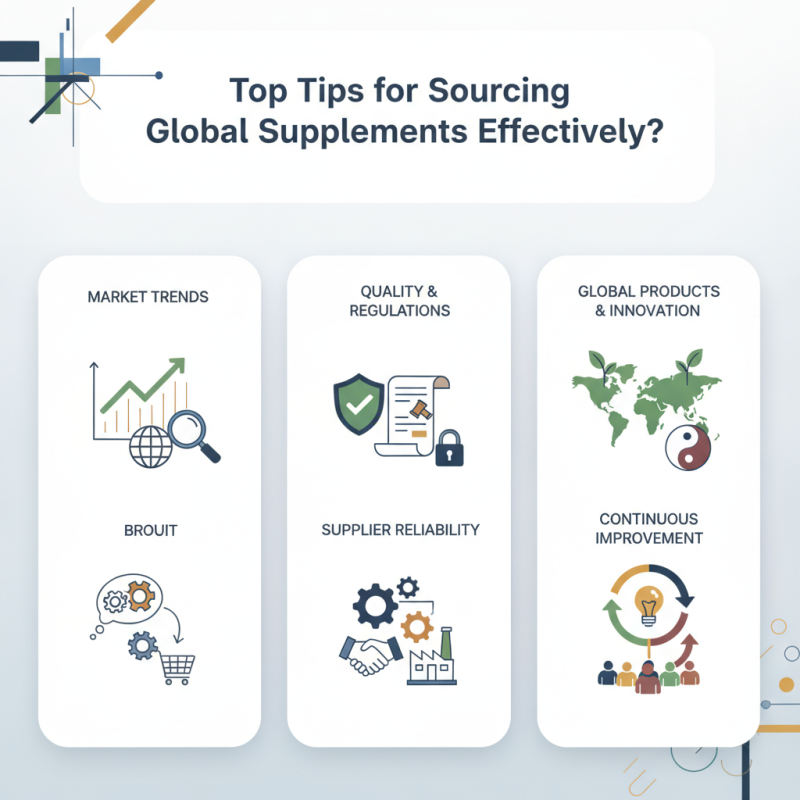
Top Tips for Sourcing Global Supplements Effectively?

Understanding the Global Supplement Market Landscape

The global supplement market is vast and complex. Understanding its landscape is crucial for effective sourcing. Different regions offer unique ingredients and formulations. Knowledge of these regional differences can help in making informed decisions.

Emerging markets often present new opportunities. However, navigating local regulations can be challenging. It's essential to stay updated on compliance and quality standards. Engaging with local experts may provide insights that improve sourcing strategies.

Additionally, trends within the market shift rapidly. Keeping an eye on consumer preferences is vital. Data analytics tools can pinpoint shifts in demand. Yet, relying solely on data may overlook key qualitative aspects. Balancing quantitative and qualitative insights enhances overall effectiveness in the sourcing process.

Identifying Reliable Suppliers for High-Quality Supplements

Finding reliable suppliers for high-quality supplements is crucial for success in the global market. Start by researching potential suppliers thoroughly. Check their certifications, manufacturing processes, and product quality. Reliable suppliers often have transparent practices. Look for third-party testing or audits, which can enhance trust.

Networking is another effective strategy. Attend industry events, trade shows, and online forums. Connect with professionals who can recommend trustworthy suppliers. Personal referrals can provide insights that mere online research may miss. Trust your instincts when assessing supplier reputation; gut feelings can often reveal underlying issues.

Consider the supplier’s communication style. Quick and clear responses are a good sign. If they are not responsive during negotiations, they may not prioritize quality service. Evaluate their sample products carefully. Each should meet your standards for potency and purity. Regular assessments and feedback loops are also essential to ensure ongoing quality.

Evaluating Regulations and Compliance for Global Sourcing

When sourcing global supplements, evaluating regulations and compliance is crucial. Different countries have varying standards. According to the International Trade Centre, around 70% of supplement products face regulatory challenges in international markets.

Understanding local regulations ensures product safety and efficacy. Regulatory agencies, such as the FDA in the U.S., have specific guidelines. In Europe, the European Food Safety Authority (EFSA) oversees compliance. Each jurisdiction enforces its own rules on labeling, health claims, and ingredient safety. Non-compliance can lead to costly recalls and reputational damage.

Importantly, the challenge lies in staying updated. Regulations frequently change. For example, the World Health Organization reported that over 40% of supplement manufacturers struggle with compliance updates. This creates potential risks for companies not actively monitoring changes. Relying on erratic resources can lead to misinformed decisions. A proactive approach, including consulting regulatory experts, can mitigate these risks and enhance market access.

Negotiating Contracts and Pricing with International Suppliers

When negotiating contracts and pricing with international suppliers, understanding market dynamics is crucial. Researching pricing trends in the specific region can reveal vital information. Each country has unique economic factors that influence costs. Emphasizing local currencies helps in negotiations. Buyers should consider exchange rates and potential inflation. Knowledge is power, especially in international dealings.

Establishing clear communication channels can make or break a deal. Utilize various methods—emails, video calls, or face-to-face meetings—to foster trust. Ensure that all terms are detailed in writing. Misunderstandings can lead to conflicts down the line. Pay attention to cultural differences, as they can affect negotiation styles. Flexibility is essential; being rigid might close opportunities.

Negotiating isn't just about getting the lowest price. It's about finding a balance. Consider payment terms, delivery schedules, and quality standards. Suppliers may have their reasons for certain pricing, rooted in their own costs. Reflection on what both sides need will create long-lasting partnerships. A successful negotiation should leave both parties satisfied and ready for future collaboration.

Establishing Quality Assurance Protocols for Supplements

Establishing quality assurance protocols is crucial for sourcing global supplements. It starts with defining what quality means for your products. This involves selecting raw materials that meet specific standards. Collaborating with reputable suppliers is essential. Conducting thorough research and audits ensures they adhere to industry regulations.

Incorporate regular testing for contaminants and potency. This guarantees that the supplements are safe and effective. Use certified laboratories to conduct these tests. Keeping detailed records helps maintain transparency and accountability. Regular reviews of supplier performance can highlight areas for improvement.

It's important to foster a culture of quality within your organization. Training staff on quality assurance practices boosts awareness and compliance. Encourage open discussions about potential issues in sourcing. Reflecting on past mistakes allows for better decision-making. Quality assurance is an ongoing process that requires commitment and diligence.

FAQS

: What is essential for effective sourcing in the global supplement market?

: Understanding regional differences in ingredients and formulations is crucial for informed sourcing decisions.

Why should companies engage with local experts?

Local experts can provide valuable insights on compliance and quality standards, aiding in sourcing strategies.

How do market trends affect sourcing decisions?

Trends shift rapidly, making it vital to monitor consumer preferences and market demands regularly.

What is the role of regulations in global supplement sourcing?

Evaluating regulations ensures product safety and adherence to diverse local standards, affecting market access.

What challenges do companies face with regulatory compliance?

Over 40% of manufacturers struggle with updates, making proactive monitoring of regulations essential.

How should pricing negotiations with suppliers be approached?

Research local market dynamics and consider economic factors like exchange rates to improve negotiation outcomes.

Why is communication important during negotiations?

Clear communication fosters trust and helps prevent misunderstandings that could harm future deals.

What should negotiators keep in mind regarding cultural differences?

Cultural nuances can impact negotiation styles; being aware of these is important for successful discussions.

Are the lowest prices always the best outcome?

Not necessarily; a successful negotiation balances price, terms, and quality to foster lasting partnerships.

How can companies avoid pitfalls in sourcing decisions?

Relying solely on data can be misleading; balancing quantitative insights with qualitative factors is essential.

Conclusion

In the ever-evolving landscape of global supplements, effectively sourcing high-quality products requires a comprehensive understanding of the market. Key strategies include identifying reliable suppliers who adhere to industry standards and regulations. Evaluating regulations and compliance is crucial to ensure that the supplements meet international safety and quality requirements.

Additionally, when negotiating contracts and pricing with international suppliers, it is essential to foster strong relationships while securing favorable terms. Implementing robust quality assurance protocols will further enhance product safety and efficacy, ensuring that the supplements sourced globally meet customer expectations. By focusing on these vital aspects, businesses can successfully navigate the complexities of the global supplements market.

Amelia

Amelia

Amelia is a seasoned marketing professional with a wealth of expertise in our company’s core offerings. With an unwavering passion for driving growth and innovation, she plays a pivotal role in shaping our marketing strategies and enhancing brand visibility. A key aspect of her responsibilities......